
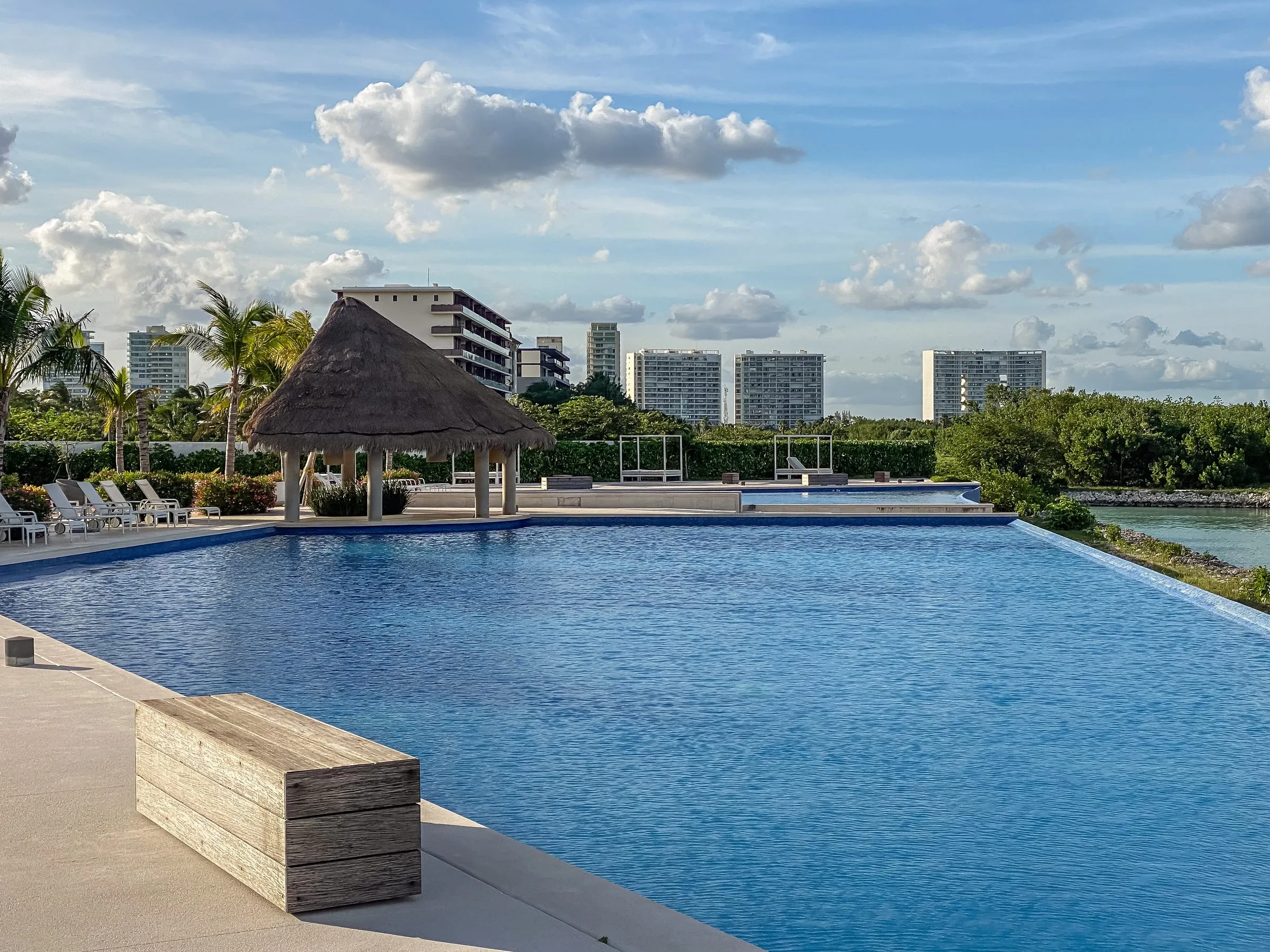
Every image in this article is real Studio 28 work for vacation rental properties in Cancun and the Riviera Maya.
This guide covers what actually makes a vacation rental listing convert, what to expect from a shoot you don't have to attend in person, and what factors into the price.
In long-term real estate, the photo helps sell the property. In vacation rentals, the photo is the product. A guest never sees the apartment before they book it. They see twenty photos on a screen, compare them to twenty other listings in the same search, and decide in seconds which one gets the reservation. The unit itself doesn't matter until someone has already clicked "book."
That's a strange position for most hosts, especially the ones managing a property from another country or another city. You know the place is great in person: the light in the afternoon, how the space actually feels, the little details you picked out. None of that transfers through a phone photo taken during a five-minute walkthrough between guests. And the algorithm on these platforms rewards listings that get clicked and booked, so a weak photo set doesn't just cost you bookings today. It quietly buries the listing further down the search results over time.
The fix isn't complicated, but it is specific: vacation rental photography is its own discipline, distinct from general real estate photography, because the goal isn't "show the property accurately." It's "make someone want to be inside this space right now." A real estate buyer tolerates an average photo because they're going to see the property in person anyway. A vacation rental guest has no such patience: the photo is the entire evaluation, and there is no in-person visit to correct a bad first impression.
This matters even more for hosts who bought in the Riviera Maya specifically as an investment property they rarely visit. You're not just competing with the unit down the hall. You're competing with every other listing in Tulum, Playa del Carmen, or Cancún that a guest has open in twenty other browser tabs at the same time, most of which were also photographed by whoever the host could find fastest and cheapest. A proper photo set is one of the few things that separates a listing that books consistently from one that sits half-empty at the same nightly rate.
What actually makes a vacation rental listing convert
Five kinds of shots do almost all of the work in a vacation rental gallery. Each one answers a different question a guest is asking, often without realizing it.
The money shot: the photo that defines the listing
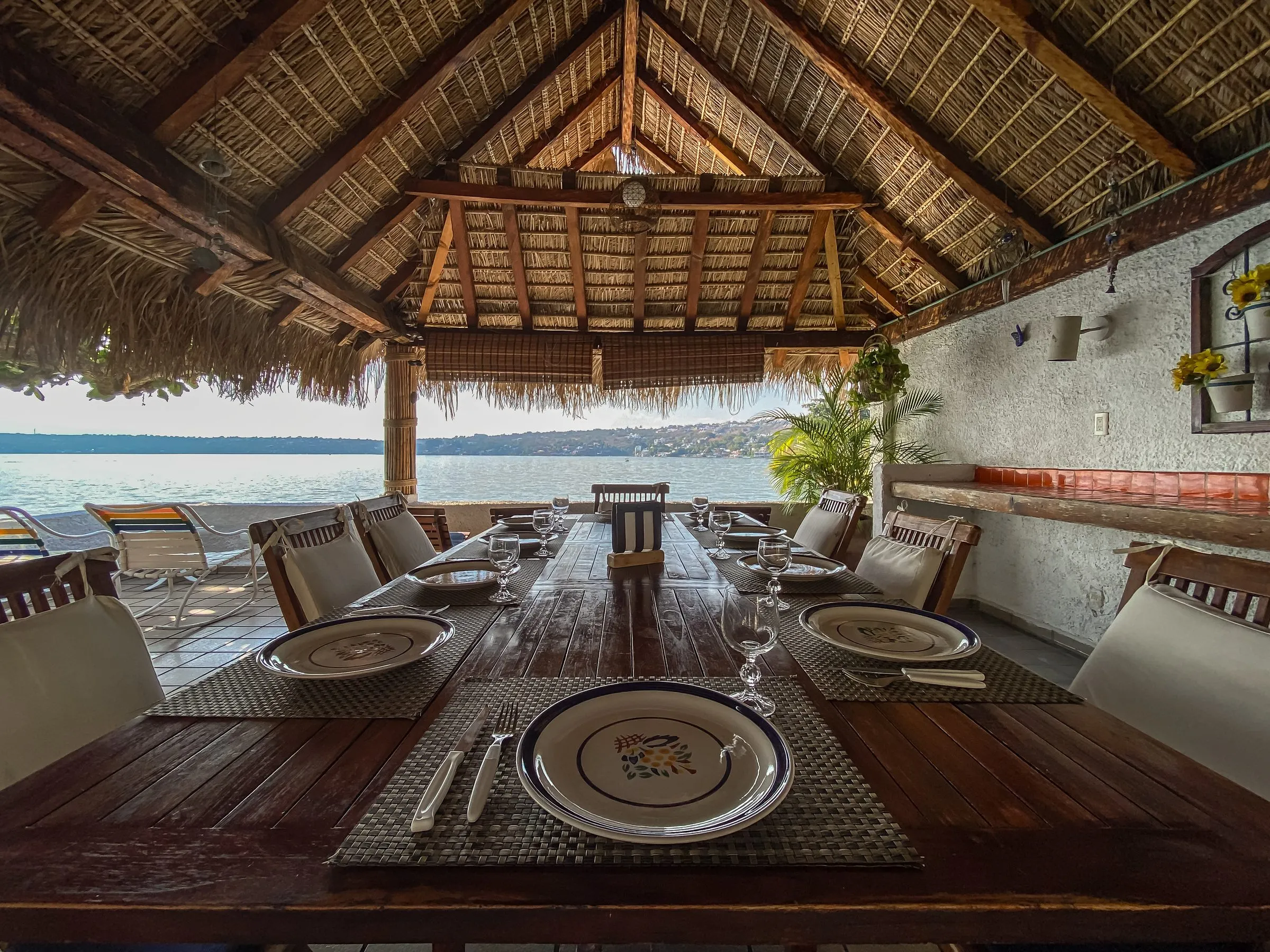
Every strong vacation rental gallery has one photo that could stand alone as the listing's identity: the pool at the right time of day, the ocean view from the living room, the rooftop at golden hour. Platforms use this as the cover image, and it's the single biggest factor in whether someone taps into the listing at all.
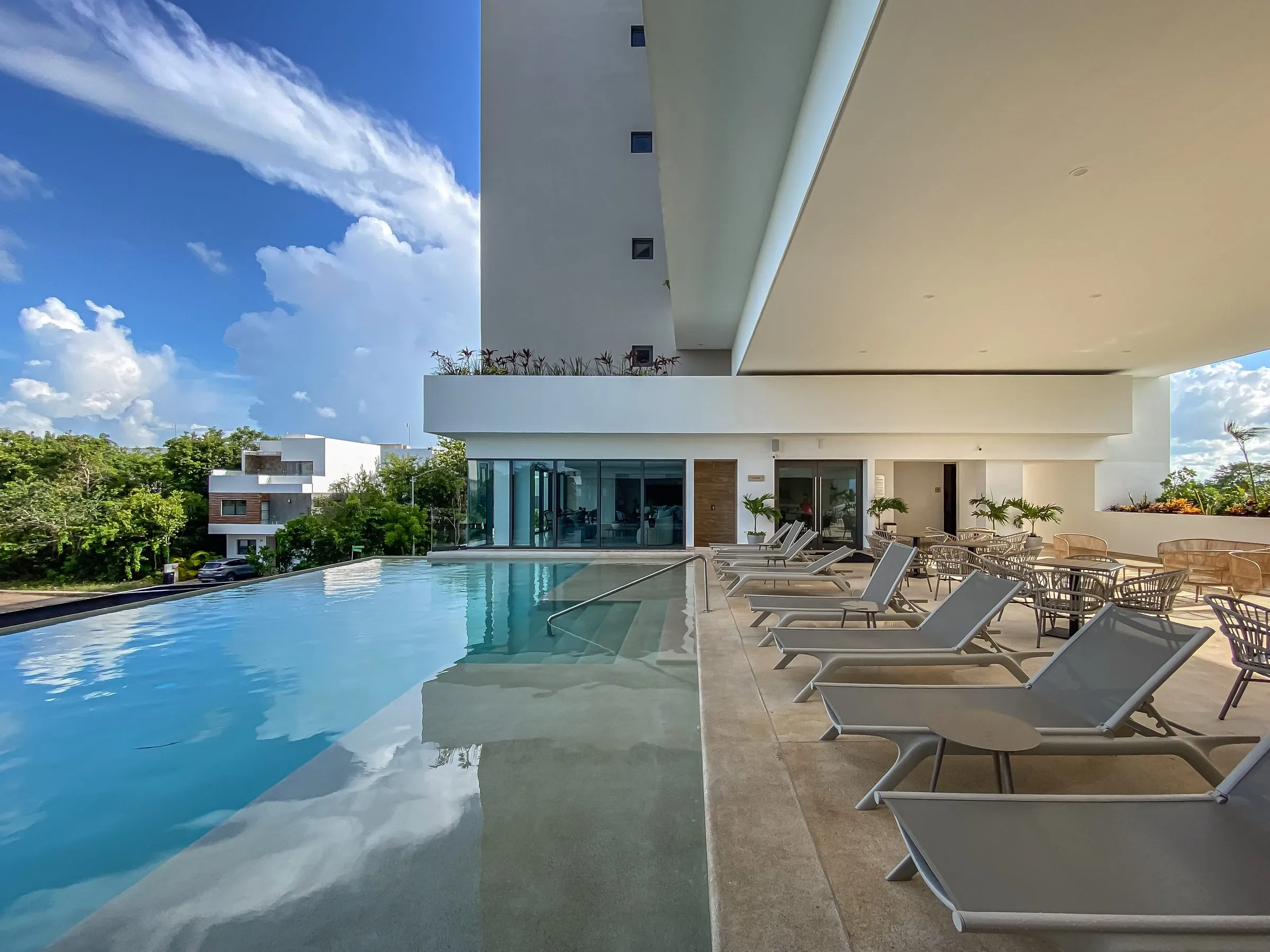
Spaces that feel livable, not empty
A living room shot straight-on with nothing but furniture reads like a real estate listing, not a place to spend a vacation. A few deliberate touches (a book on the table, a drink set out, doors open to the light) make the same room feel like somewhere a guest can picture their trip happening, without ever looking staged or fake. This is the shot type most hosts get wrong on their own, because an empty, perfectly tidy room photographs as sterile rather than inviting, even though it looks "clean" in person.
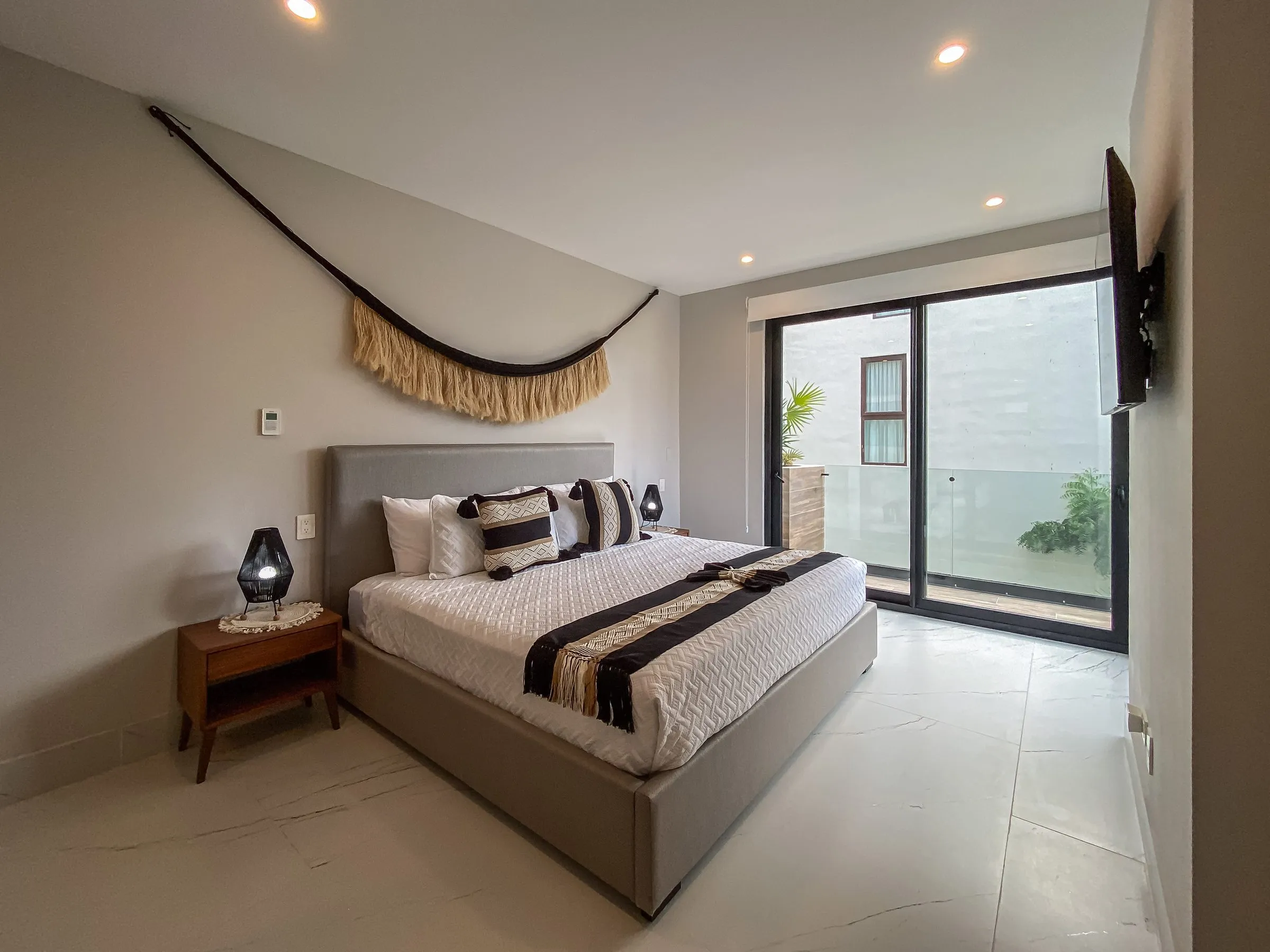
Details that raise rate perception
The espresso machine, the specific tile in the shower, the linens, the little bar setup. These are the photos that let a guest justify paying more than the listing next door, because they can see specifically what they're paying for instead of taking the host's word for it.
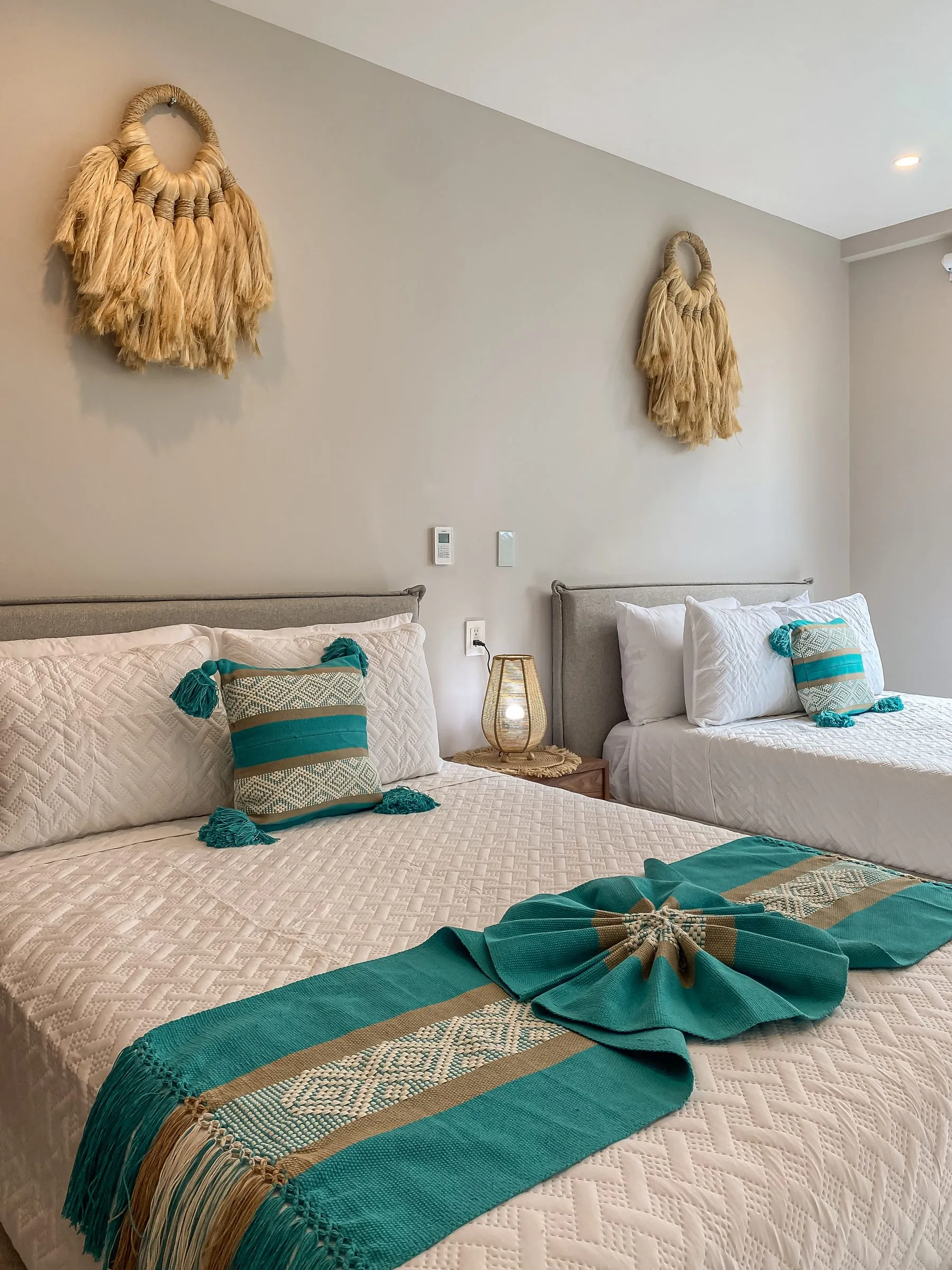
Exteriors and the view
In the Riviera Maya specifically, exteriors often do more work than interiors: the walk to the beach, the jungle view from the terrace, the street the property sits on. A guest booking from abroad is buying the location as much as the unit, and exterior photos are what prove that location is real.
Vertical video for the listing and social
A short vertical walkthrough, the kind that works natively on Instagram and TikTok, gives a guest the sense of moving through the space that no single photo can. It also gives you something to post every time you update the listing, instead of reusing the same four photos for two years.
Not every listing needs all five in equal measure. A studio near the beach lives or dies on the money shot and the view; a large villa marketed for group stays leans harder on showing every livable space and amenity so a group of eight can picture everyone fitting comfortably. Part of planning the shoot is deciding, before we arrive, which of these five carry the most weight for your specific property and the guests you're trying to attract.
What matters most for your type of property
The five shot types above apply to every listing, but how much weight each one carries shifts depending on what you're renting out and who you're renting it to.
Studio or one-bedroom near the beach. The money shot and the exterior view carry the listing almost by themselves. A small space photographed with confidence beats a small space that apologizes for its size with wide-angle tricks that just end up looking distorted.
Family-size villa, three or more bedrooms. This is where showing every livable space matters most. A family or group booking wants to confirm everyone actually fits before they commit to splitting a bill, not fall in love with one pretty living room and get surprised later.
High-end view unit. Exteriors and the view do more work here than anywhere else, because the view is often the actual product being sold at a premium nightly rate, not the finishes inside the unit.
Jungle or eco-style property. Livability and texture matter more than polish. Guests booking this kind of stay want to see the real character of the place; an overly slick, studio-lit photo set can read as inconsistent with what the listing is actually promising.
Common mistakes hosts make shooting it themselves
- Shooting at the wrong time of day. Harsh midday sun through windows blows out the best rooms in the property. Late afternoon light does more work than any editing after the fact.
- Skipping staging entirely. Family photos still on the wall, laundry visible, half-used toiletries in the bathroom: it reads as somebody's home, not a space a stranger can picture themselves in.
- Portrait-mode phone shots. They crop badly on desktop listing pages and even worse in a thumbnail, which is exactly where a guest decides whether to click in.
- Leaving clutter or a maintenance issue in frame. It becomes the first thing a skeptical guest zooms in on, and the first thing that shows up in a critical review later.
- Photographing every room at the same angle and distance. A genuinely varied property ends up looking monotonous in the gallery, which undersells exactly what makes it worth booking.
Quick prep checklist before the shoot
- Clean and declutter every room that will be photographed, not just the ones you think matter most.
- Put out fresh towels and linens, even if the property won't be occupied that day.
- Turn on every light in the space, including during the day. It changes how a room reads on camera.
- Remove personal items and anything valuable from view before we arrive.
- Stage a few deliberate lived-in touches: a book on the table, a drink poured, a door left open to the light.
- Confirm in advance who provides access on the day (you, a manager, a cleaner, or a lockbox code).
- Let a building manager or neighbors know ahead of time if the shoot involves a drone or extra equipment.
What to expect when you book a shoot you can't attend
Most of our vacation rental clients aren't in the Riviera Maya when the shoot happens, and the process is built around that. Booking is a message: property location, how many guests it sleeps, and how access works (a lockbox code, a property manager, a cleaner who can let us in). We confirm price and date, usually within the same week.
On the day, we coordinate directly with whoever has access. No host needs to be on a video call managing the shoot in real time. We move through the property the way a guest would experience it: arrival and exteriors first, main living spaces next, then the details and amenities that make the listing distinct. If the property is mid-turnover between guests, we work around the cleaning schedule rather than the other way around, since we know that schedule is usually the tightest constraint for a host managing remotely.
Delivery is digital: a link to the full edited gallery, in high resolution and in web-ready sizes, plus a vertical video file if you added that to the shoot. Everything arrives ready to upload directly to Airbnb, Booking, or your direct booking site, the same way we handle a full real estate photography session for a listing you plan to sell instead of rent. If you manage more than one unit, we can also talk about a standing arrangement so new listings or seasonal refreshes don't each require renegotiating from scratch.
What determines the price
Studio 28 publishes starting day rates in USD for international clients on our production rates page, and the variables that move the price of a shoot from that starting point are consistent, and worth knowing before you request a quote. None of them are a reason to avoid asking. They're just what we'll actually ask you about before we can give you a real number instead of a guess:
- Size of the property: a studio apartment isn't the same shoot as a multi-bedroom villa with a private pool.
- Number of distinct spaces and amenities: more rooms and amenities to cover means more shoot time and a larger final gallery.
- Vertical video as an add-on: adding a walkthrough video changes the scope of the session beyond stills.
- Turnaround urgency: a rush delivery outside our standard turnaround is quoted separately.
- One-off shoot versus recurring: property managers with multiple units get a different rate than a single one-time shoot.
- Location: properties inside our usual coverage area carry no extra cost; properties further out include a travel fee confirmed at quote time.
None of these get resolved with a generic price range, which is why we quote based on the actual property and its location rather than a number that may not apply to your specific unit. Two units of the same square footage in the same building can be genuinely different shoots if one has a private plunge pool and a styled terrace and the other doesn't, and pretending otherwise with a flat rate would either overcharge one host or undercharge the other.